What will actually be yours?
Exclusive use describes an agreement about who can use a place and when. Start with the house, rooms and grounds reserved for your group, then check accommodation and services separately. A property can feel beautifully private while still requiring an additional catering contract, a separate bedroom commitment or an agreed charge for another evening.
For an English country-house wedding, picture the arrival rather than just the ceremony photograph. Can family leave luggage before lunch? Where does a guest who arrives early wait? Will the couple dress in the main house or move there later? Those small transitions decide whether a private house feels like your home for the weekend.
If you are still choosing between a city celebration and a country stay, begin with our England wedding guide. Here, the decision is narrower: which proposal delivers the kind of privacy and time together you want? Mark the answers on a floor plan before comparing totals.
Choose one priority before you enquire. If you chiefly want dinner, dancing and a restful night for close family, say so. If you want a longer residential gathering, describe the welcome evening and departure morning as well. It gives the venue something concrete to respond to and helps you recognise a generous-looking package that does not suit your plans.
- Which named rooms, gardens and arrival areas are reserved for our party?
- At what time does each space become available, and when must it be clear?
- Who else may be present: residents, hotel guests, visitors or another event?
- Which bedrooms, meals, furniture and staff appear as included items in our dated proposal?
Read the hire scope in separate columns
A single inclusive-looking figure can hide several different arrangements. Use the same attendance, ceremony plan and overnight dates for every enquiry. Then give each line one of three answers: included, additional or not available. An unanswered line remains a question; it should never quietly become an inclusion.
Hedsor House in Buckinghamshire illustrates why detail matters. Its official FAQs, reviewed on 8 November 2026, describe wedding hire from 10.30am, accommodation for 26 people and breakfast for overnight guests, with checkout at 10am the following morning. The same page distinguishes a stay at The Hive the night before from hiring the main house for an additional day.
That is one venue’s published arrangement, rather than a definition that applies to other houses. For your own shortlist, ask the team to confirm the applicable package and dates in writing. A getting-ready address on the estate does not automatically give early access to every reception room.
| Part of the offer | Ask the venue to specify | Keep separate |
|---|---|---|
| Private spaces | Named house rooms, gardens and any shared routes | Other residents, visitors or estate activities |
| Access period | Guest arrival, supplier setup, music finish and clearance | An overnight stay versus another event day |
| Bedrooms | Room names, bed layouts, nights and who pays | Sleeping places versus seated wedding capacity |
| Food and service | Meals, drinks, service team and equipment | Property hire versus a catering package |
| Indoor alternative | Named rooms and layouts for your actual guest count | A covered photograph versus a workable rain plan |
| Additional gatherings | Welcome supper and next-day breakfast permissions | Meals for residents versus all wedding guests |
| Production | Delivery, installation, storage and collection windows | Guest access versus supplier working time |
| Total commitment | Itemised charges, tax treatment and change terms | The hire figure versus the complete event proposal |
Private spaces
- Ask the venue to specify
- Named house rooms, gardens and any shared routes
- Keep separate
- Other residents, visitors or estate activities
Access period
- Ask the venue to specify
- Guest arrival, supplier setup, music finish and clearance
- Keep separate
- An overnight stay versus another event day
Bedrooms
- Ask the venue to specify
- Room names, bed layouts, nights and who pays
- Keep separate
- Sleeping places versus seated wedding capacity
Food and service
- Ask the venue to specify
- Meals, drinks, service team and equipment
- Keep separate
- Property hire versus a catering package
Indoor alternative
- Ask the venue to specify
- Named rooms and layouts for your actual guest count
- Keep separate
- A covered photograph versus a workable rain plan
Additional gatherings
- Ask the venue to specify
- Welcome supper and next-day breakfast permissions
- Keep separate
- Meals for residents versus all wedding guests
Production
- Ask the venue to specify
- Delivery, installation, storage and collection windows
- Keep separate
- Guest access versus supplier working time
Total commitment
- Ask the venue to specify
- Itemised charges, tax treatment and change terms
- Keep separate
- The hire figure versus the complete event proposal
Sources: Hedsor House: official wedding and accommodation FAQs
The exclusions that change a comparison
Ask for the full proposed cost of hosting your particular celebration, with assumptions attached. Put property hire, accommodation, catering, drinks, staffing and production on separate lines. Where relevant, ask how VAT, service charges, corkage, supplier meals and overtime are treated. If the team says an item is included, record what quantity, duration and level of service that means.
Decide which elements you would genuinely use. An additional night has value when it lets your group settle in or share a relaxed meal. It has less practical value if most guests cannot arrive until the wedding day. Equally, a lower hire figure can be entirely suitable when nearby accommodation and a simple transfer plan match your group.
Read payment dates alongside the decision dates for guest numbers and rooms. Ask what happens if those numbers change, which cancellation provisions apply and how a later amendment is recorded. The Competition and Markets Authority’s current guidance says consumer terms must be fair and transparent. A clear-looking summary is not a substitute for reviewing your actual contract; obtain suitable professional advice about a term you do not understand.
Keep the comparison in the currency of each written offer. If you are weighing an English house against a European estate, label any currency conversion with its date and assumptions. Avoid turning an indicative exchange calculation into a guaranteed wedding cost.
Sources: Competition and Markets Authority: fair and transparent consumer terms
Bedrooms are a guest decision, too
An intimate overnight group and a larger wedding party can work beautifully together. The difficult part is leaving the accommodation plan implicit. First choose who needs to sleep on site and why: the couple, someone with an early preparation role, relatives needing a shorter journey or families whose evening will finish earlier. Then check that the actual rooms meet those needs.
A bedroom count does not reveal the bed layout, bathroom arrangement or route from the reception. Request a rooming plan showing doubles, twins, additional beds and any access limitations. Ask specific questions about steps, lifts and bathrooms with each affected guest’s requirements in mind. A historic house should not be assumed accessible because its ground-floor dining room is.
For example, imagine a hypothetical wedding with 80 guests and 24 overnight places. There are still 56 people whose departure or hotel journey needs planning. If one nearby hotel cannot house everyone, two accommodation clusters may be calmer than a long list of unrelated addresses. Arrange clear pickup points and ask transport providers to confirm vehicle suitability for the approach road.
Be equally clear about payment. Are you hosting the rooms, inviting guests to pay the venue directly or guaranteeing a block yourself? Ask who is responsible for unfilled rooms and when allocation becomes final. Explain the arrangement before people commit to travel. Our guest accommodation guide develops the room-allocation and overflow-hotel questions without assuming every guest has the same budget or mobility.
Check the morning as carefully as the evening. Guests at an overflow hotel may need to collect luggage or return a car before joining breakfast. A clear invitation can say where breakfast takes place, who is hosting and when it finishes. For travellers returning home that day, let them decide against a further gathering without making departure feel like a missed obligation.
Keep a timeline beside the floor plan
The most useful comparison document is often two pages: one marked plan and one sequence of handovers. Put the first supplier arrival, guest access, bedroom check-in, ceremony, room change, music finish, breakfast and final collection in order. Leave a visible gap wherever a time has not been confirmed.
Supplier access deserves its own line. Flowers arriving before a ceremony need a permitted unloading route and somewhere to work. A stylist may need power, mirrors and a room before the rest of the party can enter. Collection the next morning can overlap with breakfast or checkout. Ask the relevant teams to confirm these practical arrangements rather than treating the main hire start time as an answer to everything.
Save the dated proposal with its floor plans and later written amendments. Give the planner and venue the same version. If a room name, hire period or bedroom allocation changes, update the shared record and ask for acknowledgement. This is a planning tool, not a replacement for the venue contract.
At a viewing, test one changeover together. If the same room holds the ceremony and dinner, ask where guests will have drinks, where chairs are stored and how the room is reset. Include a wet-weather version. You are looking for a workable sequence with enough space for staff and guests to move comfortably, rather than a promise that the transformation is quick.
Private does not have to mean isolated
A well-run exclusive-use celebration still involves people working around you. Catering deliveries, housekeeping and security can be essential to a comfortable stay. The question is where they work and how their routes relate to your group, especially during preparations, the ceremony and dinner.
Ask the venue to mark service entrances, any occupied residential areas and any paths that remain in other use. Check whether privacy covers only the house, a defined garden or the wider estate. A promise that no second wedding takes place may be different from closing every business or visitor facility. Neither arrangement is automatically wrong; it must match what you are inviting guests to expect.
Try a simple walkthrough: arrival to drinks, drinks to ceremony, ceremony to dinner, dinner to dancing. Where do people queue, pass a kitchen door or cross a driveway? Who guides someone arriving late? A clear route and a discreet welcome can matter more than having an enormous area that your group barely uses.
For a group that values quiet conversation, ask where someone can sit away from the music while remaining part of the evening. Privacy should support different ways of enjoying the celebration, including a calm place to feed a child or take a short rest.
Photographs introduce a different privacy question. Discuss whether the venue or any supplier would like to use images afterwards and how consent is handled. Share your preferences before the event, particularly where children or guests who do not want public photographs are concerned. Physical exclusivity and permission to publish images should be separate conversations.
Ask to see the wedding you would host in rain
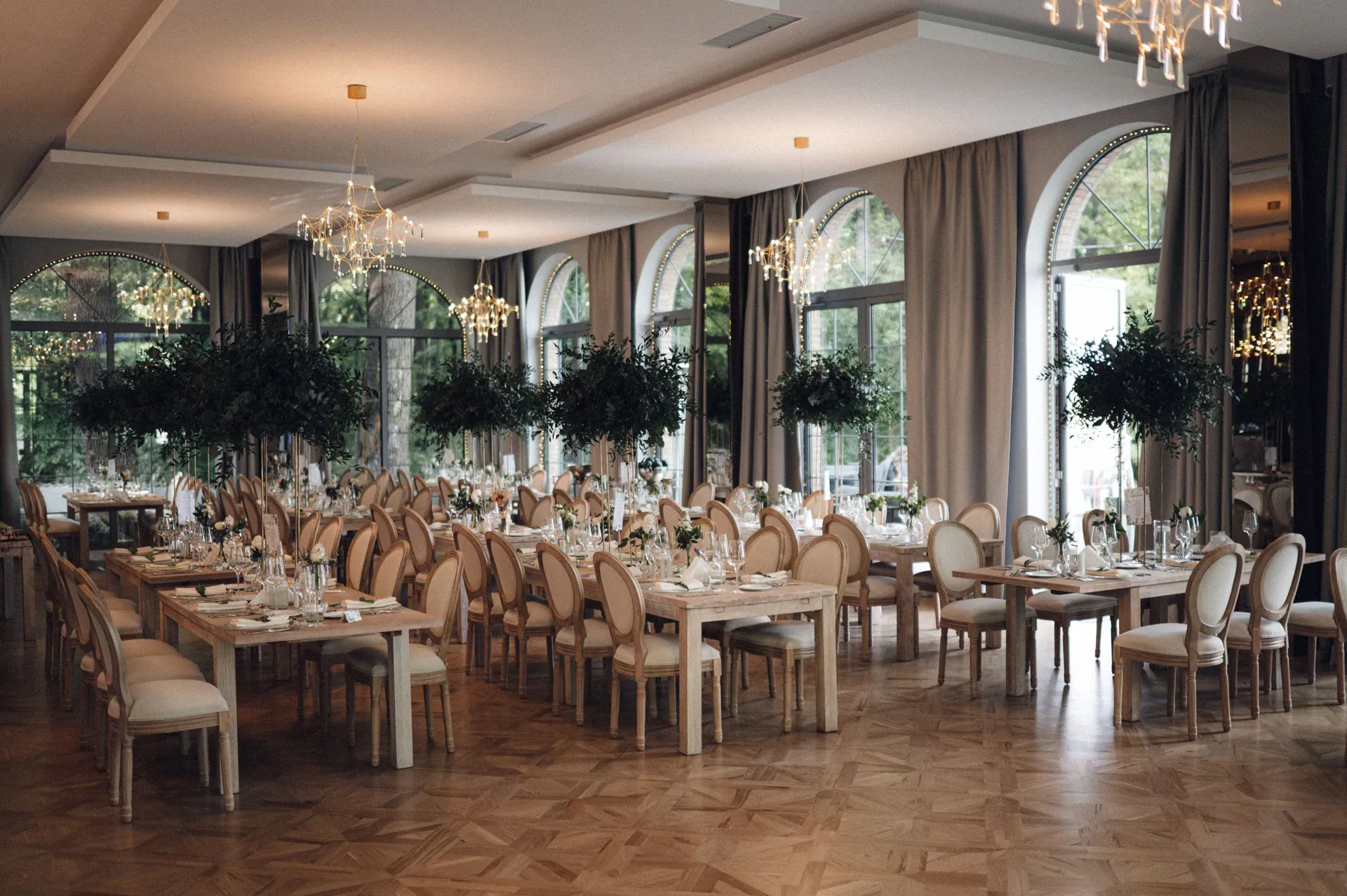
Look at the indoor version with the same care as the garden ceremony. Ask for a layout using your intended attendance, table arrangement and entertainment. Walk the route between rooms and check what happens while staff change a space from ceremony seating to dinner. The guest experience needs to work during the changeover, not only after the final place setting is ready.
For an English autumn or winter celebration, discuss coats, wet umbrellas, entrance lighting and the journey from vehicles to the house. In any season, consider a guest who cannot comfortably wait outside. Ask when the weather decision is made, who makes it and whether the alternative introduces staffing, furniture or installation costs.
A continental comparison shows why the actual description matters. Château de Tourreau in Sarrians, Provence, currently lists outdoor-only wedding receptions for up to 150 people on its own events page, reviewed on 8 November 2026. That figure should not be read as indoor wedding capacity. Ask the property directly what wet-weather arrangements are possible for your event; do not infer them from its separate seminar-room listings.
Keep your wedding rain-plan checklist beside the proposal. A reassuring sentence such as “we always have a plan” should lead to a named room, an agreed layout and a practical decision time.
A country-house weekend needs more than another night
Elmore Court in Gloucestershire offers a useful English example of distinct parts within one setting. Its current wedding page describes exclusive hire of the house, gardens and The Gillyflower, breakfast the following morning and a wedding-night suite; food and drink are additional. Its accommodation page identifies 16 main-house bedrooms and says its six treehouses are booked separately. Both pages were reviewed on 8 November 2026.
The lesson is to ask which accommodation and gatherings belong to your proposal. A room being on the estate does not settle its availability, price or inclusion. Confirm the applicable Coach House arrangements and the exact hire period with the team for your date. Treat the published description as a starting point for a written offer, not a completed booking.
Now sketch your own weekend without filling every hour. Would a welcome supper help people meet, or would an informal arrival evening suit better? Could breakfast include everyone, or only residents? If friends stay elsewhere, decide whether they should return for another gathering and make the invitation clear.
Allow time for people to arrive independently, change, rest and depart. A two-night stay can support a slower pace, but it also introduces another rooming night, meal and staffing conversation. Compare the version you would actually host with the version that merely sounds generous on paper.
Sources: Elmore Court: official wedding hire · Elmore Court: official accommodation
Send one focused follow-up before deciding
Use this as a draft to adapt to your date and group. Remove questions already answered in the current proposal so the team can concentrate on what remains unclear.
“We are comparing private-use arrangements for our wedding and would appreciate a dated scope for our proposed guest count. Please confirm the named spaces reserved for our party, any areas that remain shared and the access period for guests, preparations, suppliers and final collection.”
“Could you also show which bedrooms and nights are included, who books and pays for any additional rooms, and which meals cover overnight residents or the wider wedding party? Please identify the indoor layout for our attendance and any conditions or additional charges that apply to that alternative.”
“Finally, please separate property hire, accommodation, catering, service and production, with the relevant tax treatment and payment and change terms. We would like to understand the full arrangement before choosing a package or confirming a booking.”
Keep the answer with your venue enquiry brief, mark the remaining questions and arrange the next viewing around those points. You should leave knowing where people will be, what they will share and how the celebration will move through the house.
Sources
Something needs a closer look? Our corrections approach.